by ACCORD, Inc.
When lockdown measures were implemented to prevent the spread of COVID-19, even development projects were halted. Community-based trainings and workshops implemented by actors from outside the barangays were not allowed as they could be carriers of the virus. Local leaders play a critical role in a time when external support is limited and when the community’s safety is prioritized.
CARE local partner organization, ACCORD, Inc., ensures that potential leaders are recognized and gradually help them develop their capacities, self-confidence, and credibility. ACCORD shared, “Organizing and building capacities of local champions, community facilitators, and project steering committees at the barangay level was done as part of the project’s adaptive and sustainability measures. When staff’s mobility was restricted, valuable assistance was provided by the community champions – not only in the implementation of emergency responses on the ground but also in setting up regular project activities with our field teams. The project intends to engage and work with the same champions throughout the project, whose capacities for local leadership will remain, even after project closure.”
Among these local leaders is Josefina, 65, who serves as a Barangay Health Worker in Cullit, Gattaran in the province of Cagayan. Her daily duties include monitoring the health of children and elderly persons in their community. Since resources are scarce, she also helps out in medicine allocation, prioritizing the old and the sick. Now that there is a pandemic, she also helped out in the Social Amelioration Program (SAP) of the government, ensuring that the most vulnerable are included in the list. Josefina said that what she does in her barangay brings her happiness because she was able to provide help to her fellow senior citizens, especially now that the pandemic made serving her community more challenging. She recalled that her worst experience of a calamity was in 2012. She shared, “Our community and livestock had to be evacuated in higher grounds, and whatever was left behind were covered in thick mud after being submerged in the flood. Our family and neighbors had to clean the waist-deep mud in our houses, and had to sleep on the streets for about three weeks.” Because of this, she recognizes the importance of disaster preparedness, “the INCREASE project helped our community in planning and preparing for hazards and disasters.”

To also continue actively involving the communities despite the restrictions, INCREASE also responded to COVID-19. The timing of the pandemic coincided with lean season when farmers had to engage in alternative income-generating activities such as buying and selling vegetables. With lockdowns and restrictions in accessing goods, such activities are not allowed. For Josefina, “the rice packs helped my community, especially those whose livelihoods were affected because of the travel restrictions and
lockdown. Meanwhile, the COVID-19 information materials remind my community to follow health protocols and what to do to protect themselves from the virus.”
Involvement of local actors also includes inviting them in knowledge exchange sessions that are relevant in their current context. Made possible through the Resilience and Innovation Learning Hub (RILHUB), INCREASE partner LGU in Cagayan was able to attend relevant webinars on resilience and DRR – covering topics such as Contingency Planning during COVID-19, Setting Up Community Quarantine Facilities, and Camp Coordination and Camp Management Training. Such information exchange sessions were seen timely by local actors as these webinars coincided with their preparation timelines for updating municipal disaster risk reduction plans, comprehensive development plans, comprehensive land use plans, and local climate change action plans – undertakings defined as actual project outputs in INCREASE’s result framework, and areas in disaster governance INCREASE’s technical assistance seeks to enhance.
While activity implementation under INCREASE remains restricted, it is through these emergency responses and knowledge exchange sessions that ACCORD was able to check-in, and assess the evolving needs of INCREASE barangays in actual emergencies. Local leaders were also more involved in the project and appreciate its flexibility in delivering the appropriate emergency response given the urgent situation.
by CorDisRDS, Inc.
The Cordillera Disaster Response & Development Services Inc (CorDisRDS Inc.) is a non-government organization providing disaster response and community development services to the communities of Cordillera Provinces: Apayao, Kalinga, Abra, Mountain Province, Ifugao, Benguet, and Baguio City. Their main activities include facilitating assistance to disaster-affected communities and helping in the distribution of relief assistance, giving training and seminars to capacitate community and people’s organization leaders and their members.
Support given by CARE:
CorDis-RDS is the local partner of CARE Philippines in implementing INCREASE project in Mountain Province. INCREASE or Increasing the Resilience to Natural Hazards aims to increase the resilience of
45,000 women and men small-scale farmers and fishers, including 720 extreme poor female-headed households, to natural hazards and the effects of climate change.
During the COVID-19 pandemic, CARE Philippines and CorDis-RDS, has provided personal protective equipment to municipal local government units (MLGUs) and sacks of rice as a relief to communities in Barlig and Natonin, Mountain Province.
COVID-19 information materials were also distributed in the areas to promote preventive measures against the coronavirus
The Problem
What has been your experience since the COVID-19 pandemic started?
The CorDis-RDS team has experienced challenges in reaching the communities because of travel restrictions. Before community quarantine was implemented, the team would spend 2 weeks in INCREASE areas where they would visit 4 barangays in two municipalities. But because of the pandemic, they had to cut their field work short to one and a half week covering three barangays. Since then, they were not able to go back to these communities.
According to Liza Lomong-ey, CorDis-RDS Field Officer, “Since the declaration of enhanced community quarantine in March 2020, it has been so stressful because the team was not able to personally reach partner communities and local government units (LGUs) in this trying time and we have not implemented activities for almost 6 months and are confined within our homes and office due to the safety protocols being implemented.”
How have you adapted operations to reach your beneficiaries?
The pandemic has heightened the importance of network-building, especially on the ground, in implementing emergency response and development projects. While faced with travel restrictions, the team has worked on strengthening their relationship with people’s organizations and LGUs so they can understand the evolving needs of the communities.
Liza mentioned, “Communication between INCREASE team and partner LGUs was sustained through constant updating and coordination via phone calls and text messages. From constant updating with MLGUs and partner BLGUs, COVID responses in Natonin and Barlig namely the provision of PPES and rice assistance were implemented. This was made possible through building partnerships with LGUs and their willingness to implement such.”
It is also important to keep the response strategy adaptive to the changing situations in the communities. For example, Barlig and Natonin are in the same province but follow different process in implementing relief distribution.
Liza shared, “The distribution of PPEs and sacks of rice were implemented by the municipal disaster risk reduction officer. Particular for the PPEs in Barlig and Natonin, it was channeled to the PDRRM office which was later fetched personally by Barlig MDRRM officer together with the PPEs for Natonin. Likewise, the rice distribution in the municipality was implemented under the supervision of Barlig Mayor’s office and MDRRM officer. In Natonin, the distribution was implemented directly by partner BLGUs.”

Since face-to-face interaction was not possible for CorDis-RDS team, they have supplemented the efforts of the LGUs with localized communication materials. This way, the communities would have reference materials for long term preventive measures as a community against COVID-19.
“We were also able to reach our partners through sending a localized IEC material on reminders for COVID 19 to 6 communities in Natonin and a minimal copy of COVID flyers (long term measures) to selected LGUs in the municipality,” said Liza.
What has been the ‘word on the ground’?
Community lockdowns were implemented by the government, limiting people’s movement and livelihood options. This has negatively affected their income as several businesses have closed either temporarily or permanently. A lot of people have lost their jobs, while farmers couldn’t reach market places to sell their produce because of the travel ban.
Liza said, “INCREASE areas in Mountain Province are affected by this COVID pandemic in terms of economic aspect. Their livelihood is affected due to protocols on public transportation and transport of goods.”
How do you think the typhoon season is going to affect operations?
Operating in disaster-prone areas, CorDis-RDS team is used to shifting to emergency response whenever it is needed. However, this means that the regular activities being implemented for INCREASE project will have to be re-strategized so it can be pushed through in an efficient manner.
Liza shared her worries about the typhoon season, “The implementation of planned activities in two partner municipalities will surely be affected this last quarter of the year if there will be typhoons that will hit Northern Luzon. Some planned activities will not be implemented, the main reason is accessibility/ road cuts given the location of Natonin and Barlig which is mountainous in nature which is also prone to landslides and erosion. In addition, Cordis will surely shift to emergency mode wherein all pending activities and office works will be set aside for the meantime.”
Do you think you can weather the storm?
“The team together with partner communities must weather the storm, not literally, but to adjust on whatever the plan and activities are and to strictly follow LGU protocols in this pandemic period,” said Liza.
CorDis-RDS team understands that increasing resilience to natural hazards is much more needed in a pandemic. Preventive actions to protect self and others should be observed while planning for or experiencing disasters. Being fully informed of these measures and strengthening the capacities of the local actors are their best way to weather the storm
by: Leyte Center for Development, Inc. (LCDE)
Responding to the unique needs of women and girls
Food, water, and medicine are limited during and after a crisis. In a household where resources are limited, women are usually the ones to eat the least amount of food because they sacrifice their share for their husband and children. Women and girls, being more vulnerable during and after disasters, have needs that should be considered in designing and implementing multipurpose cash transfers (MPCT). Therefore, their involvement is important to ensure that the MPCT actually addresses their and those of their families and communities’ needs, challenges, and opportunities.
In the Typhoon Kammuri response led by CARE together with Leyte Center for Development Inc in the early months of 2020f, MPCT has involved women from the design phase of the distribution process. Each household was given the opportunity to decide which family member should be registered and receive cash transfers on behalf of the household. In these cases, women were as likely to receive the MPCT as men. Because of this, the usual tension on financial decision-making upon the receipt of the cash was reduced, as the registered names in the distribution list came from and owned by the household. Women will then have a voice on where to allocate the cash.
Prior to the distribution of the MPCT, the community, especially women, has also received complimentary training sessions on Build Back Safer and hygiene and sanitation. Build Back Safer which involves lessons on carpentry, usually gathers men as participants because carpentry is traditionally considered as men’s work. However, since women were encouraged to come, they have attended and realized that they can also do such work. This has also been useful for men participants to be aware that women can also do other roles. Women have also reported that they appreciate such sessions because they served as a safe space so they can share their experiences and learn from one another. It is also important for the women to have learned handwashing measures that they can share with their children at home. This has proven that complementing MPCT with learning sessions raise awareness on disrupting gender roles among men and women in the community.
Women supporting women
Most volunteers during the distribution of water kits and MPCT were women. Their initiative comes from the sense of responsibility they have towards their community.

In one barangay, a woman leader in an organization ensured that people in her community are informed if there is a disaster coming. Without her, people at-risk might have not been able to prepare or evacuate their area since information dissemination is a challenge in the area because of limited cellular signal. This leader has also expressed the need to revive the women’s organization to have more activities that could benefit the community and to access basic services collectively.
To save time, effort, and resources, women and men who collected the cash took the opportunity to buy their needs on the same day of the distribution, since the distribution sites are near market places. Due to lockdown measures by the government, pregnant women and the elderly were not allowed to go outside. Their women neighbors, then, offered to buy their needs for them. This sense of solidarity among women has been more evident in times of disaster and pandemic. Safety issues due to the distance from the distribution site and their communities were reduced when women self-organized to go together to protect one another.

Women protecting other women has also been true in Brgy. Magsaysay. Josefina, 68, is a farmer whose income has also been affected by the pandemic. Because some of her farm produce were not sold due to travel ban, she shared them to her neighbors since she knows that a lot of families in her community are suffering from hunger. She has also visited houses of women to talk to them to make sure that they are safe. This has given these women psychosocial support. In times of extreme experiences brought by a disaster and pandemic, it is likely that people feel fearful and anxious. Mental health and psychosocial support is a clearly-identified need, and therefore, doubly crucial.
by Leigh Fuentes, CARE Philippines
Although the COVID-19 Pandemic has exerted multiple shocks all over the globe and on all types of communities, certain populations remain the most vulnerable.
Nanay Guillerma, 56, is a mother of five children. She works as a cook at a small, local canteen. Luckily, her employers were quite considerate to workers like her, even extending some supplies to help underscored needs amidst a struggling economy, especially when limited by the pandemic measures and guidelines in the country. However, this does not mean that Nanay Guillerma is confident enough to say she can make ends meet for her and her family.

With all five of her kids at home sue to school closures and age, age limitations on people allowed outside of their home, and the implementation of online learning, it is indubitable that her load of unpaid care and domestic work has significantly increased, not to mention, she is a single mother. Forced to undergo distance learning to continue school, her children are not only dealing with the transition to learning lessons at home and online but have also seemingly reached a cul-de-sac. Out of five siblings, four of Nanay Guillerma’s children need to attend school through online or digital mediums, but Nanay Guillerma’s family only has two cell phones available. They have no other gadgets that may be used for academics purposes.
“Kapag natatanong [ng guro] yung bunso ko kung bakit hindi siya nakakapasok, ang nasasagot na lang niya ay ‘cell phone, Ma’am. Wala.’”
[“There are times when my youngest gets asked [by teachers] why there are times that he is unable to attend online classes. All he can say is ‘Ma’am, we don’t have a cellphone.’”
With her income barely covering rent and other daily needs like food and supplies, Nanay Guillerma also constantly worries about her kids’ progress in school. She says that although her two older daughters are mature enough to adjust and cope, she regularly gets stressed out by the additional help her younger children need with school work. As an adaptive measure to a lack of gadgets, her kids’ teachers have encouraged her to at least assure that they can study and accomplish learning modules at home. However, Nanay Guillerma also worries about her capability to assist in academics especially when lessons in the curriculum begin to get more advanced, “hanggang first year high school lang naman ako,” she says. [“I also went to school only until my first year in high school.”] Moreover, she also has bad eyes and constantly finds it difficult to read and write without glasses, an item she does not even have on her person. This is one of the reasons she was accompanied by her daughter during the Together for Her Multipurpose Cash Assistance in Caloocan City.

According to an estimate from UNESCO, as of March 2020, 89% of the world’s student population (children and youth) are out of school due to COVID-19 closures, including 743 million who are girls. Students have been forced to shift online despite large parts of the said population in low-tech or no-internet areas. With over 1.5 billion students at home due to the pandemic, there is an increased demand for unpaid childcare and domestic work at home, which in turn, impairs their time and capability to accept and carry out paid work, most especially with jobs that cannot be carried out remotely or from home.
With all these worries constantly running through Nanay Guillerma’s mind, she says that it gives her recurring headaches and even sometimes makes her forget to add certain ingredients to recipes when she is cooking at the canteen, resulting in a scolding at work. She worries that in the long run, it might cost her her job.
“Ano na ang kakainin namin kapag nangyari iyon? Ano na ang pangsuporta namin sa buwan-buwang pangangailangan namin?”
[“What will happen to my family then, if I lose my job? How are we supposed to get support for our monthly needs?”]
*Nanay is a Filipino term that directly translates to mother.
by Leigh Fuentes, CARE Philippines
Amidst a crowd of people, mostly women in their thirties and forties, *Nanay Lolita stood out with silver hair despite a slightly slumped posture. Regardless of the great number of multipurpose cash assistance (MPCA) receivers, there were only two of us staff members assigned to this money transfer facility. We were awkwardly and barely perched behind a crooked table on the sidewalk of a narrow road where motorcycles and jeepneys flowed nonstop. My partner for this station caught my attention as I finished handing out our pamphlets on gender-based violence in the time of COVID-19. He had told me that it might be a good idea to have a chat with Nanay Lolita to provide the rest of our team with better insight and for me to better understand the current situation of many women in the Philippines.
 Nanay Lolita was sitting beside our little table, our pamphlet and her MPCA claim form in one hand, and a big blue plastic bag in the other that had, at the time, unknown items inside that rattled whenever she would shift her position. She sported a worn-out yellow shirt, a piece of promotional material usually given out for free to promote a candidate during election season. My implementation partner gave her a spare surgical mask; she was walking outdoors without one.
“Kumusta po kayo, Nanay?” [How are you?] I asked her. “Ito ho, mabuti naman,” [Doing okay.] she replied with a slight shrug of her shoulders. She told me that she likes to spend her days walking and that she used to walk far greater distances when she was a little younger. “Hindi ko na rin gaano nagagawa dahil bumibigay na rin ang katawan ko,” [I don’t really get to do this as much anymore because my body has started to give out,] she says. Nanay Lolita walking thinks it helps keep her legs and muscles functioning well. She does not only use walking to exercise and think but to also collect scrap and recyclable plastic littered on the streets or in sourced trash cans. I look down at the plastic bag in her hand and suddenly make out the shapes of two or three plastic drink bottles. She has been scavenging through garbage for around two years now, and at the age of 72, this means that she has been out and about 20 years beyond the declared senior citizen age in the Philippines. Residing in a country having the longest recorded lockdowns in the world, Nanay Lolita recounted how this affected her simple routine. She was forbidden from going outdoors during the lockdowns and partners from the local government even shared how the authorities deployed to assure quarantine and lockdown measures were being followed came to be familiar with Nanay Lolita’s face due to her persistence to go outdoors.
“Pakiramdam ko malulumpo ako kapag hindi ako nakaklakad tapos hindi pa ako nakapangangalakal.” [I feel like my legs would atrophy if I just stop walking and that means I would also no longer be able to scavenge for scrap plastic to sell for money]. The plastic materials she would have been able to collect would be up for selling to junk shops and other places of the like for a minimal amount of cash. “Kahit papaano, may kaunting nakukuha,” says Nanay Lolita. When the need would arise, she would beg for change from passers-by, public transportation drivers, and commuters. She shared with smiling eyes how sometimes people would randomly hand her a small amount of money and she would automatically think that they were paying her to do a small favor for them or that it was just for her to hand to someone else. When she would clarify, “akala ko may pinapakisuyo kasi minsan ganun, pero pang merienda ko daw.” On the flipside, her eyes changed and seemed sullen and hurt when she also recounted how there were also times when people would look her head to toe and say negative or hurtful things toward her.

Nanay Lolita is only one of thousands upon thousands of women who are experiencing the impact of the pandemic at a greater and more difficult to address degree. The United Nations has stated that the era of the Coronavirus has become a “defining moment for an inclusive and targeted response” for the sector of the community that is among the most physically and economically vulnerable population – the elderly. During a time when intense pressure and instability are placed on the average individual and even more so on frontliners, society is now put on the spot to address deep-set inequalities in terms of access to social services like health care, as well as the presence of age discrimination and the lack of community participation in planning and decision-making.
Moreover and on a global scale, the COVID-19 pandemic has punctuated the degree to which societies rely on women while simultaneously bringing to light the inequalities sewn into our daily routines, touching on health and other social services, the economy, independence, or involvement in decision-making. According to UN Women, violence against women has intensified since the pandemic with exacerbating factors such as security, health, and financial worries, cramped living conditions, isolation with abusers, movement restrictions, and deserted public spaces.

Referring to UN Women data from April 2020, a number of countries have recorded a surge of 25 percent in domestic violence reports and emergency calls since social distancing measures were implemented. Women and girls are hit harder by economic shocks. Generally earning less, women are able to save less despite comprising a majority of single-parent households. The pandemic has significantly increased the unpaid care and domestic work of women at home, thus disabling them from taking on or balancing paid work. According to a report from the International Labour Force in Geneva (2018), although not all informal workers are poor, there is definitely a positive relationship between informal employment and poverty; 91% of women in South Asia are informally employed (compared to 87% observed in men across the region).
Nanay Lolita may have come alone for a minimum amount of assistance on the day we were in Barangay Tangos South, Navotas City, but many women across the globe may not even have had this opportunity. CARE, together with its local partners in the Philippines, does not only plan to sustain its humanitarian operations in times of crises, but also to continue to work toward promoting lasting change and innovative solutions in order to support the strengthening of essential service delivery, community resilience, and empowering the most vulnerable, particularly women and girls.
*Nanay is a Filipino term that directly translates to mother.
As the spread of COVID-19 has forced people indoors, life has become even more dangerous for women experiencing domestic violence, especially for those who are most marginalized. Not only are women experiencing this violence, but many children, who are also home from school, are witnessing and potentially experiencing domestic violence themselves. According to the UNFPA, six months of lockdowns could result in an additional 31 million cases of gender-based violence. The Metro Manila RGA COVID-19 findings (Sep 2020) also reported the following:
- There is an exponential increase in GBV risk and incidence due to COVID-19 and its interventions; a “shadow pandemic” that is severely underreported
- PNP data reported (15 March to 02 April): 391 cases of VAWC, 42 cases of rape
- There is disruption of services for VAWC survivors due to overburdened offices/facilities during COVID-19
As such, coming together to support women in this crisis is critical.
This month’s webinar is in line with CARE’s global anti-GBV campaign Together for Her, a call to action to stand in solidarity with women and girls around the world by supporting the global response against domestic violence during the time of COVID-19.
The project endeavors to address COVID-19’s “shadow pandemic” of gender-based violence in vulnerable communities in the Philippines. It will:
- Lessen GBV risk in households and provide social safety nets if women are GBV survivors through multi-purpose cash assistance;
- Raise awareness and strengthen local capacity to establish GBV referral pathways and community-based GBV monitoring; and
- Advocate for GBV services as essential, life-saving interventions in COVID-19 response on the local and national level.
In the Philippines, the Together for Her anti-GBV campaign is implemented by CARE and local partner ACCORD in Partners for Resilience communities in Malabon, Navotas, and Caloocan and with Pambansang Koalisyon ng Kababaihan sa Kanayunan (PKKK) in Salcedo, Eastern Samar, Basey, Western Samar, and Sta. Catalina, Negros Oriental.
This pamphlet was used to disseminate information and highlight the necessary information for communities and stakeholders to progress the prevention of Gender-Based Violence, particularly in the barangay level.
View and download the full document here.
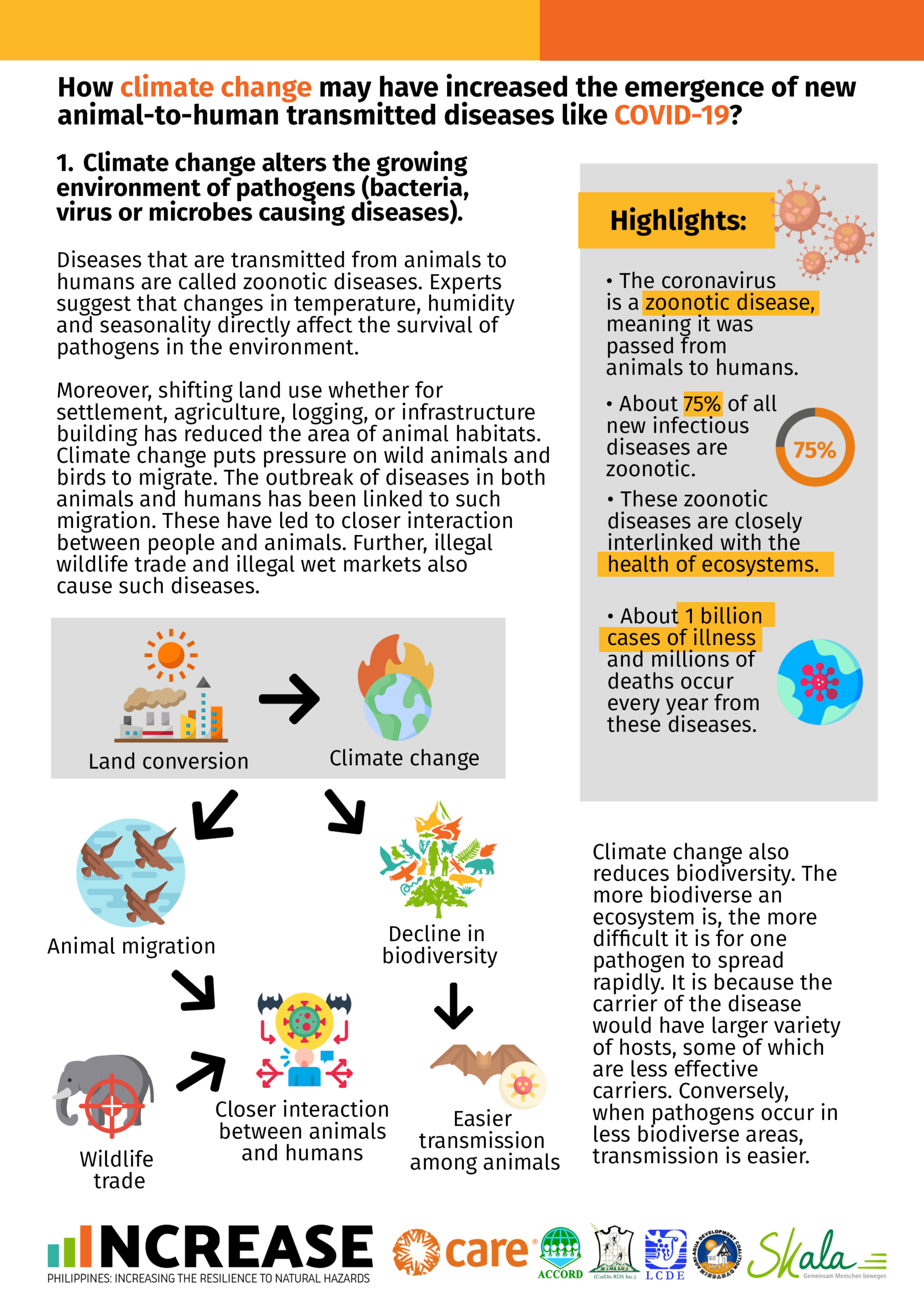
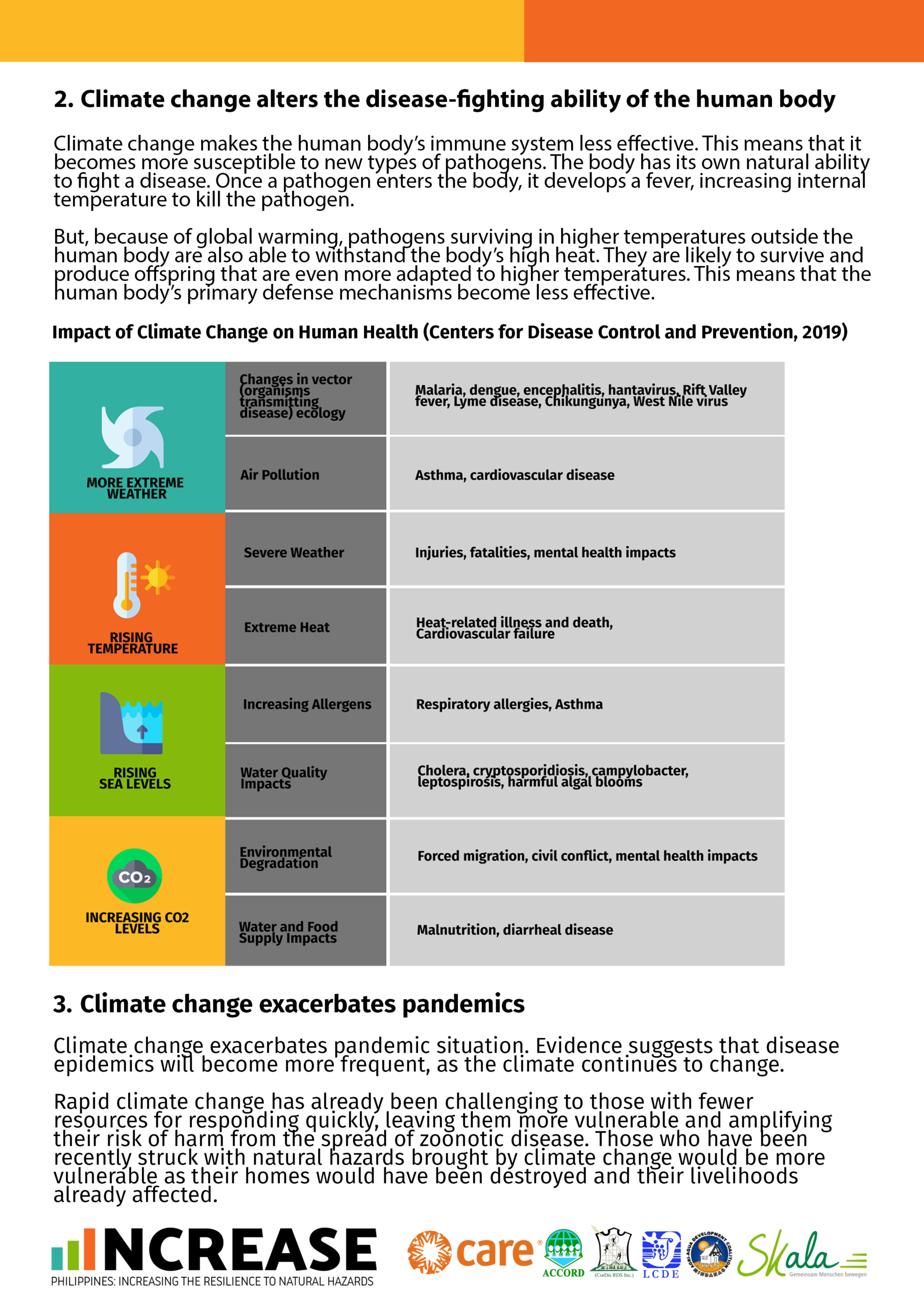
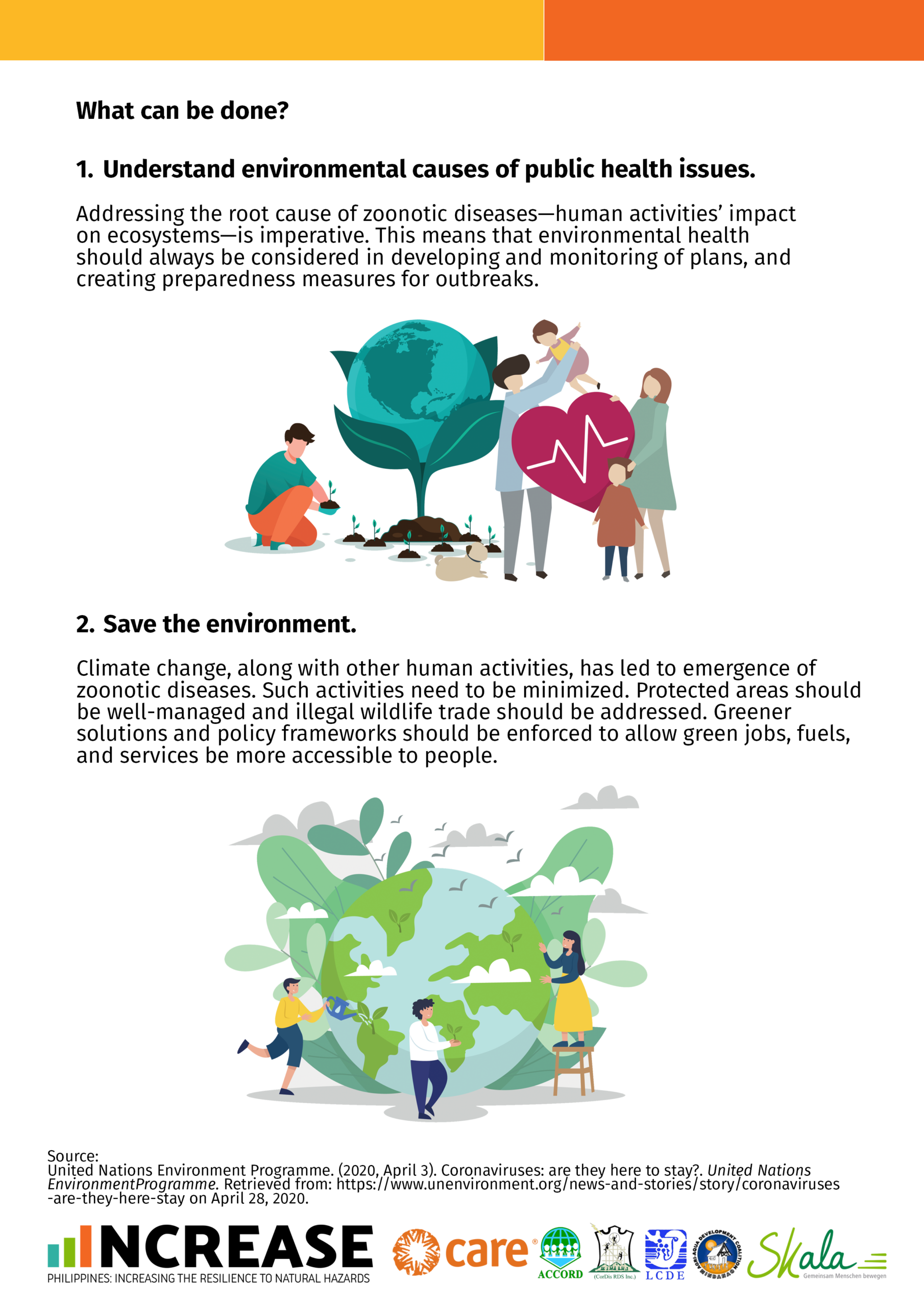
This summarizes the United Nations Environment Programme report on coronaviruses and explains the correlation between climate change and diseases. It also includes an infographic of the impact of climate change to human health and steps that people can collectively act on.
Click on the photos in the gallery below to enlarge and download a soft copy of these materails.
To address the confusion among Filipinos about the difference between the 2 available tests for COVID-19, this infographic (in Filipino language) was created. If you think you have coronavirus disease 2019 (COVID-19) and need a test, contact your health care provider, local pharmacy, or local health department immediately.
You may save the image below for a soft copy of this material.

INCREASE or “Philippines – Increasing Resilience to Natural Hazards” aims to aims to increase the resilience of 45,00 women and men small scale farmers and fishers, including 720 extremely poor female-headed households, to natural hazards and the effect of climate change. The project will run from 2019-2021 in different parts of the Philippines, namely 36 barangays across 8 municipalities in the provinces of Cagayan, Mt. Province, Northern Samar, and Surigao del Sur. Its project components and activities include early warning systems, alternative livelihood, and climate and disaster governance.
These guidelines come from the Department of Health which is intended for all Filipinos, whether owning a business, running a school, or driving a public utility vehicle, or an individual going to these places, to reduce our risk of exposure to the virus that causes COVID-19. It is in Filipino language and comes with visual aids, so they can be easily digested by readers.
View and download a copy of the posters through this link.
INCREASE or “Philippines – Increasing Resilience to Natural Hazards” aims to aims to increase the resilience of 45,00 women and men small scale farmers and fishers, including 720 extremely poor female-headed households, to natural hazards and the effect of climate change. The project will run from 2019-2021 in different parts of the Philippines, namely 36 barangays across 8 municipalities in the provinces of Cagayan, Mt. Province, Northern Samar, and Surigao del Sur. Its project components and activities include early warning systems, alternative livelihood, and climate and disaster governance.
Based on the released public health standards of the Department of Health, this infographic aims to remind INCREASE communities of the simple steps they can do at home to prevent getting sick.
You may save the image below to have a copy of this material.

INCREASE or “Philippines – Increasing Resilience to Natural Hazards” aims to aims to increase the resilience of 45,00 women and men small scale farmers and fishers, including 720 extremely poor female-headed households, to natural hazards and the effect of climate change. The project will run from 2019-2021 in different parts of the Philippines, namely 36 barangays across 8 municipalities in the provinces of Cagayan, Mt. Province, Northern Samar, and Surigao del Sur. Its project components and activities include early warning systems, alternative livelihood, and climate and disaster governance.