This video will be presented during the Pacific Resilience Meeting 2021 in a session that aims to share insights around the integration of climate change adaptation and disaster risk reduction in the Pacific and to trigger reflection on recent research initiatives that look at where are biggest challenges and opportunities are across policy, legislation and community practice.
Mariedel “Dhel” Barbin is the Secretary of Barangay Potrero in Malabon City, Philippines. Barangay Potrero is a project area of the Moving Urban Poor Communities toward Resilience (MOVE UP) Project and the Partners for Resilience Project funded by the European Union Civil Protection and Humanitarian Aid. Read more at https://rilhub.org/2020/09/29/communi…
Given the context of continuously rising COVID-19 cases in the country and the immediate need to address hospitals’ surge capacity, the Moving Urban Poor Communities Toward Resilience (MOVE UP) Project, with its success in piloting and replicating alternative temporary shelter (ATS) systems as an urban resilience strategy, will build a 40-bed Community Quarantine Facility (CQF) in Malabon City from late May to mid-June. The CQF will help augment and increase the capacity of hospitals and other medical infrastructures in the area by servicing suspected cases and those with mild COVID-19 symptoms. The ATS System, originally intended to address the lack of dignified space and shelters for internally displaced families affected by disasters, can serve as base model for designing CQFs. MOVE UP, together with its technical partner for shelter United Architects of the Philippines – Emergency Architects (UAP-EA), intends to present replicable models built on practical design criteria (robustness, affordability, scalability, range of application, and speed of construction) for local government units (LGUs) and communities that need facilities for isolation and quarantine.
This video is the recording of the first-ever session of the Resilience Knowledge Exchange Series or RKES.
Assistance and Cooperation for Community Resilience and Development, Incorporated or ACCORD is one of four founding members of the Resilience and Innovation Learning Hub. As a non-profit civil society organization, ACCORD works in partnership with the least-served, most vulnerable communities in the Philippines on resilience-building activities. Working hand-and-hand with poor communities, people’s organizations, local governments, and other civil society organizations, ACCORD works to harmonize approaches to climate change adaptation, disaster risk reduction, and environmental protection. ACCORD has a long history of jointly developing and implementing projects together with CARE.
Last March 9 marked ACCORD’s 11th year of implementing development and humanitarian projects and programs across the country. Through conducting and implementing over 50 different projects, over 4 million Filipinos were reached in the past decade, a feat that contributed to strengthening communities across the nation, most especially those who belong to the most vulnerable sectors of society.
RILHUB’s reactivation in 2020 was greatly contributed to by partners and colleagues from ACCORD through the coordination and implementation of projects such as Partners for Resilience (PfR) and Moving Urban Poor Communities toward Resilience (MOVE UP). ACCORD has also contributed largely to the production of various knowledge and learning materials produced by RILHUB or available on the different RILHUB platforms.
On their official Facebook page, ACCORD shared a heartfelt, albeit short message of gratitude to who has been and is a part of their journey — be it from far-flung areas and communities, local agencies and government units, non-government organizations, and donors.
“Makakaasa po kayo sa aming buong pusong pagtalima sa aming mga gawain at dedikasyon na maging bahagi ng pagpapataas ng lokal na kapasidad sa pamamagitan ng mga programa na may pangmatagalang sipat.”
“You may look forward to ACCORD’s wholehearted pursuance of our commitments and projects, as well as our dedication to taking part in increasing local capacities by developing and implementing programs with long-term goals,” shared ACCORD through social media.
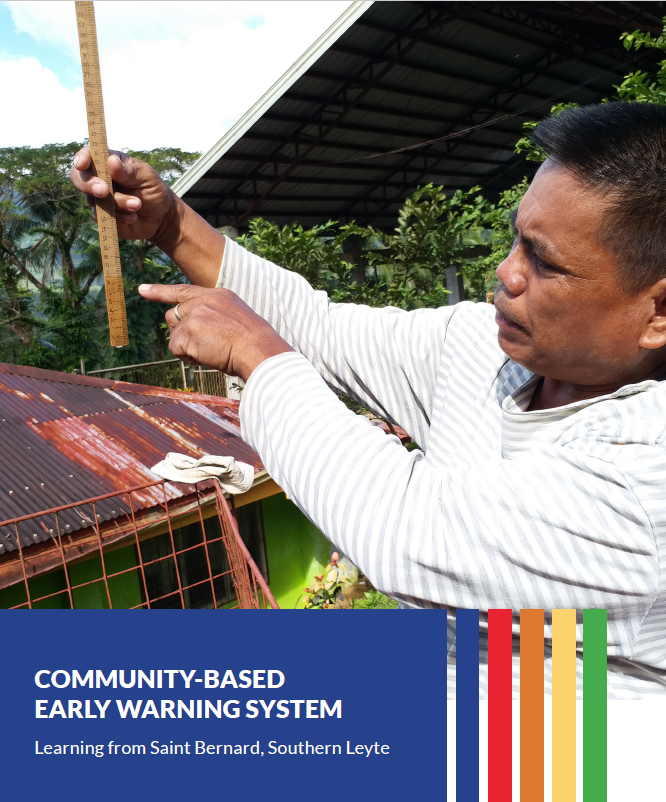
This report is based on CARE and ACCORD’s partnership with communities, PAGASA, and PHIVOLCS in previous projects implemented using Integrated Risk Management, and which received support funding from the European Civil Protection & Humanitarian Aid Operations (ECHO) and the Partners for Resilience project.
Natural hazards, climate change, and unrestrained ecosystem degradation are spawning extreme events, resulting in massive losses of lives and livelihoods.
Early warning systems (EWS) are crucial in reducing the risks to which vulnerable communities are exposed: effective ones can save countless lives and livelihoods, and less effective ones can turn hazards into disasters and extreme events.
It can provide the opportunity for individuals, communities, governments, businesses, and others to take timely action to reduce risks in advance of hazardous events. This, in turn, contributes to building community resilience. But for an EWS to be effective, it needs to be end-to-end, people-centered or community-based, and landscape-wide.
Community-based refers to an EWS that gives premium to community participation and ownership of the system. A landscape approach means it encompasses larger landscapes such as river basins or watersheds. This requires the harmonization of systems within a landscape, and cooperation among political and administrative units sharing the same landscape.
In the municipality of Saint Bernard in the province of Southern Leyte, the setting up of the EWS, among other DRR and climate change adaptation actions, was occasioned by a landslide that wiped out an entire barangay (village) in 2006. The event underscored the municipality’s vulnerability to multiple hazards and the urgent need to improve preparedness.
Through the collaboration of the municipal LGU, government agencies, civil society organizations, and community members, the EWS was instituted. In 2013, their community-based local flood EWS was recognized by the UN Sasakawa Award for Disaster Reduction for its innovative approach that combines technology and comprehensive social preparation. It was one of six projects from around the world that received the award.
This study presents Saint Bernard’s experiences and lessons learned in setting up and managing the end-to-end, community-based, and landscape-wide EWS for floods, landslides, and tsunamis.
Module 4: Mainstreaming DRR, CCA, at EMR sa mga planong pangkaunlaran
This manual is written for facilitators who will conduct training in communities that are vulnerable to various hazards.
It may also be useful for members of disaster risk reduction and management bodies in schools and at the community, barangay, city, and municipal levels; and other non-government organizations.
It is written in Filipino and presents the technical subject matter in terms that are easily understandable, and in a format that is easily readable. Among other resources, it contains tools to conduct community risk assessments.
This companion guide to mainstreaming disaster risk reduction (DRR), climate change adaptation (CCA) and ecosystem management and restoration (EMR) in an integrated way is a product of many years of practice, reflection and learning. In 2012, ACCORD and CARE Nederland published a 3-volume Training on Disaster Preparedness and Contingency Planning manual. One session, on risk reduction planning, briefly touched on mainstreaming DRR, CCA and EMR in development plans. Today, we are transforming our accumulated knowledge on mainstreaming into this companion guide or handbook, with optimism that others will find value in, and learn from our experience.
CARE Nederland introduced to us the project cycle management approach to mainstreaming. The Bureau of Local Government Development of the Department of Interior and Local Government trained us on mainstreaming DRR and CCA in the Rationalized Planning System. For both, their support was crucial in the development of our mainstreaming practice. The local government units (LGUs) that have worked with us in the mainstreaming process are too numerous to acknowledge individually, but Saint Bernard, a municipality of Southern Leyte, and Calabanga in Camarines Sur deserve special mention. Led respectively by mayors Rico Rentuza and Evelyn Yu, Saint Bernard and Calabanga enthusiastically collaborated with us in our earliest attempt at mainstreaming. Equally valuable was our collaboration with the municipalities of Maragusan, Davao de Oro and La Paz, Leyte; the Metro Manila cities of Malabon and Navotas;
As the spread of COVID-19 has forced people indoors, life has become even more dangerous for women experiencing domestic violence, especially for those who are most marginalized. Not only are women experiencing this violence, but many children, who are also home from school, are witnessing and potentially experiencing domestic violence themselves. According to the UNFPA, six months of lockdowns could result in an additional 31 million cases of gender-based violence. The Metro Manila RGA COVID-19 findings (Sep 2020) also reported the following:
There is an exponential increase in GBV risk and incidence due to COVID-19 and its interventions; a “shadow pandemic” that is severely underreported
PNP data reported (15 March to 02 April): 391 cases of VAWC, 42 cases of rape
There is disruption of services for VAWC survivors due to overburdened offices/facilities during COVID-19
As such, coming together to support women in this crisis is critical.
This month’s webinar is in line with CARE’s global anti-GBV campaign Together for Her, a call to action to stand in solidarity with women and girls around the world by supporting the global response against domestic violence during the time of COVID-19.
The project endeavors to address COVID-19’s “shadow pandemic” of gender-based violence in vulnerable communities in the Philippines. It will:
Lessen GBV risk in households and provide social safety nets if women are GBV survivors through multi-purpose cash assistance;
Raise awareness and strengthen local capacity to establish GBV referral pathways and community-based GBV monitoring; and
Advocate for GBV services as essential, life-saving interventions in COVID-19 response on the local and national level.
In the Philippines, the Together for Her anti-GBV campaign is implemented by CARE and local partner ACCORD in Partners for Resilience communities in Malabon, Navotas, and Caloocan and with Pambansang Koalisyon ng Kababaihan sa Kanayunan (PKKK) in Salcedo, Eastern Samar, Basey, Western Samar, and Sta. Catalina, Negros Oriental.
This pamphlet was used to disseminate information and highlight the necessary information for communities and stakeholders to progress the prevention of Gender-Based Violence, particularly in the barangay level.
As the Hyogo Framework for Action (HFA) draws to an end and disaster-related loss and damage continues to increase, an important opportunity arises to shape and agree upon a successor framework that will enable management of the risks that threaten to reverse vital development gains. These risks are driven by a variety of factors (UNISDR 2013) including climate variability and change, economic and financial crises, environmental mismanagement, demographic change, rapid and unplanned urbanization, and failed governance; they disproportionately impact vulnerable and exposed low-income households around the world.
As the HFA Priority area 4 refers to disaster risk reduction (DRR) strategies integrated with climate change adaptation and lists among the “critical tasks for states” to promote the integration of DRR with climate variability and climate change into DRR strategies and adaptation to climate change, considerable effort has been made by agencies to work towards convergence of the DRR and the climate change adaptation agendas. However, despite the obvious overlap, these two agendas have evolved independently and in parallel (Mitchell & van Aalst 2008, Mitchell et al. 2010, Mercer 2010) and have faced different challenges (e.g. Schipper & Pelling 2006). In terms of practical programming, there has perhaps been some risk of “relabelling” classical DRR efforts addressing weather-related risks without consciously incorporating concerns for the change in risk patterns, extreme events and vulnerability partly induced by climate change. In addition, there has been a tendency to initiate stand-alone climate change adaptation (CCA) projects disregarding existing vulnerabilities, in effect “overstating” the adaptation aspects of the project rather than integrating adaptation measures into existing approaches, as recommended in the HFA.
Since the HFA in 2005 more compelling evidence about how climate change has – and continues to – influence disaster risk has emerged (including IPCC AR4 and AR5 and SREX). At the same time, many implementing agencies, in particular civil society organizations, have developed and tested various approaches and tools to integrate climate aspects in (participatory) assessments and planning (IIRR Cordaid 2013, CARE 2009, Wiggins 2012) and considerable effort has been made to bounce ideas and share knowledge across agencies about tools and methods for integrating changing climate risks into DRR through for example, the Community Based Adaptation to Climate Change Conferences, and Development & Climate Days held in the context of the annual UNFCCC Conference of Parties (Bachofen et al 2014, Suarez et al 2013). Through these iterations, some common denominators for climate-smart community programming have started to emerge.
Pilot projects across the world have shown that addressing changing climate and disaster risks at the local level is highly effective for building resilience. Strong capacities and robust institutions at the community level can maximize the impacts of climate-smart disaster risk reduction. Yet for this to happen, it is essential that communities and the organizations supporting them all know how to integrate changing risks into their activities.
While empowering communities and the local organizations that support them to become better at managing their risk, the disaster risk reduction community faces increasing pressure to deliver on a greater scale, and help local actors steer their development trajectories upwards. At the same time, policymakers seek clarity and guidance from practitioners on the standards to set for local climate change adaptation efforts – a crucial component of national adaptation planning. Taken together, these demands call for a simplified set of criteria to ensure community-based DRR programming, as well as broader resilience-building efforts, can guide communities and the organizations supporting them.
To address this growing demand, the Minimum Standards for Local Climate-smart Disaster Risk Reduction (hereafter referred to as “Minimum Standards”) have been developed to provide a ‘good enough guide’ to help local community leaders, DRR practitioners and policymakers ensure DRR efforts are geared to more uncertain future risk patterns induced by a changing climate. The Minimum Standards are meant to serve as a useful guide for planners and donors as well so they may ensure DRR programming is meeting CCA needs and that DRR actions are going beyond business as usual by truly addressing changing climate-related risks. Indeed, recognizing that the Minimum Standards are realistic and achievable, national strategies that consider them will be able to go to scale, also in facilitating the use of climate adaptation finance for local efforts to reduce the rising risk of disaster in a changing climate.
This paper presents the Minimum Standards for local climate-smart disaster risk reduction and details how they can help trigger action on climate change under the post-2015 HFA framework. The first section provides an overview of the Minimum Standards and their relevance for guiding climate-smart action at the community level and at the civil society organisation (CSO) level. The second section presents experience of community level application of the Minimum Standards in the Philippines, Indonesia, and India in the context of the Partners for Resilience Program. To illustrate how the Minimum Standards have been used to strengthen CSO’s capacity to become climate-smart, the third section details the experience of the Vanuatu Red Cross and suggests for this approach to be replicated by other CSOs. In addition, the process by which Australian Red Cross has expanded the Minimum Standards to include gender dimensions of DRR is presented in a final case study. The paper concludes with a discussion of the way forward for maximizing the opportunities to use the Minimum Standards to inform the development of the post 2015 HFA.
If you want to develop your barangay early warning system for floods, it should be taken in the context of the Tullahan River basin” was the expert piece of advice that Susan Espinueva gave to the group that was seeking PAGASA’s technical assistance. That was in July 2013.
Ms. Espinueva was then Chief of the Hydrometeorology Division of PAGASA. Barangay Potrero in Malabon City was planning to improve its early warning system (EWS) as part of enhancing the community’s preparedness, and the Partners for Resilience program was keen on providing ample support.
Potrero is downstream of Tullahan River
Rain or shine, there are floods in Malabon. News on television has frequently shown Malabon with above ankle-deep flood water due to high tides even during clear skies and good weather. During the typhoon and monsoon rains, of course the situation worsens considerably.
In 2009 during Typhoon Ondoy (Ketsana), residents of Barangay Potrero in Malabon were startled that the water kept rising faster than normal and eventually reached the second floor of some homes. Some 6,000 families were affected. Some of these were trapped inside structures, in need of rescue support and emergency provisions. Three years later in August 2012, the same communities were again affected by floods due to heavy monsoon rains that lasted for several days.
The largest of Malabon’s 21 barangays is Potrero. With a population of around 54,000, it has been one of the most affected by the worst floods in the city. Sections of the barangay lie along the downstream of Tullahan River that stretches from Quezon City to Valenzuela City. Runoff starting from upstream La Mesa Dam in Quezon City, heavily silted and clogged Tullahan River and the frequent occurrence of high tides further contribute to the frequent floods in the area.
Potrero is one of the seven urban barangays where the Partners for Resilience (PfR) has been operating the program since 2011. It was specifically chosen because it is susceptible to floods and the affected populations mostly belong to the urban poor. The PfR program engages the Potrero barangay local government to enhance its preparedness for emergency response and work towards disaster risk reduction incorporating climate change and ecosystems management and restoration.
The road to September 2013
In the ensuing discussions with PAGASA, the group settled that to work on the EWS of Potrero it has to deal with the current status of EWS for floods in the river basin and the affected stakeholders. The Tullahan River basin covers Quezon City and the CAMANAVA area – the cities of Caloocan, Malabon, Navotas and Valenzuela.
All five cities contend with the problem of floods especially in the communities that lie along or are near the Tullahan River and its waterways.
While each has ways and actions to manage the risk, the general picture is that they do not necessarily link together to address the problem. There are EWS facilities that line the river at different points. These are basically water level and rain gauges. The La Mesa Dam Authority notifies LGUs and the public on the level of dam water. PAGASA consolidates the information that is generated from some of the EWS facilities and can make these available to LGUs. Pumping stations, river walls, dikes and other protective structures have been built in selected areas to protect specific segments of areas that are high-risk to floods. Each city issues alerts and warning based on information they are able to access.
“The floods are a problem caused by several factors in the river basin. Why don’t we call a meeting of the cities, concerned agencies and other groups who have a stake in drawing up solutions?” Once again, Susan Espinueva was forwarding sound guidance.
In September 2013, PAGASA and PFR spearheaded the first meeting of stakeholders to discuss issues on EWS for Quezon City and CAMANAVA. PAGASA defined the scope of the Tullahan River basin and traced the flow of floodwaters from upstream passing through the five cities and exiting at Manila Bay. It also showed the existing facilities for drawing up the river basin-wide EWS and pointed out that the work still has to be done to have an integrated EWS for the whole river basin. And this needs the participation of the various stakeholders.
The LGUs attended, all represented by their DRRMOs. Other agencies like the MMDA, DILG-NCR which issues the guidelines for the DRRM plans of LGUs in Metro Manila, NDRRMC which manages a big DRR project for UNDP, Ipo and La Mesa Dam authorities participated to share how they were contributing to the provision of information and shared experiences relating to flood risk management. The meeting ended on a positive note that the discussions would continue towards harmonizing the EWS for the Tullahan River basin.
Typhoon tracking exercise at the Community-Based Early Warning System Training in Barangay Potrero, Malabon City.
The partnership gains momentum
The partners’ initial step was to survey the long stretch of Tullahan River, and see the river situation and the existing EWS facilities. In the debriefing, each partner also shared how they are doing flood mitigation measures through projects and programs within their geographical boundaries. The group also visited the Pampanga Flood Forecasting and Warning System to look at a model of an integrated EWS for a river basin that gathers information, processes this and issues warnings based on the result of the data analysis. One of the good insights that came out of these activities is that the participants themselves appreciate the continuing dialogues. They even proposed that for purposes of continuity and understanding, the same individuals be officially assigned to sit in these coordination meetings.
The most recent gathering they took part in was the presentation of the results of the risk assessment covering the whole Tullahan River basin. They expressed that information sharing that serves to enrich their basis of risk reduction actions are very much needed.
For Malabon and Valenzuela, a step further was taken when they concurred and got involved in the tree planting in the upstream La Mesa Watershed. The location is beyond their geographical boundaries and yet they recognize that this is a mitigation action that will definitely benefit their communities in terms of improved urban forest cover and protected watershed or source of water for the metropolis residents.
Moving forward
Let us look at other organized groups of LGUs who have the good practice of working together to reduce the risk of floods and other hazards and learn from them,” was the common call in the last gathering of these stakeholders in September 2014. It was a year after the initial meeting of stakeholders in the Tullahan river basin. The risk assessment was done by a group composed of individuals knowledgeable in history, biology and environmental science. More and more, they are convinced that they need multi partnerships and multi disciplines to proceed with a good analysis of the risk situation they are facing and hence need the same methods to forward an integrated plan or solutions to pursue in their next steps.
The sight that greeted the rare visitor to Barangay Langaon was unexpected, and inspiring. Men and women, including some elderly, were busy repairing the hanging bridge known as Kalawahig-1. Some were erecting two concrete posts where steel cables of the bridge will be re-anchored. Some were replacing the wooden planks. Some were gathering rocks from the riverbed and piling them into an embankment that will strengthen the bridge’s foundation. Two days ago, the bridge was washed out by a flashflood spawned by typhoon Pablo (Bopha).
Typhoon Sendong (Washi) damaged the Kalawahig-1 suspension bridge that connects barangay Langaon to “the outside world.” The bridge was already in a state of disrepair prior to Sendong. The flooring was made of bamboo. The sides were unprotected and anybody, but most especially children, could easily fall into the river. The bridge was in urgent need of repair as the community could not bring their farm produce to the market, could not safely access relief assistance and basic services, and could not bring in basic commodities.
In March 2012, CARE worked with the community to undertake minor repair of the bridge, as part of the cash-for-work activity. Cyclone wires were installed on the sides of the bridge to prevent people from falling into the river. Rotting bamboo were replaced to strengthen the flooring. Community members were jubilant, feeling safer as they cross the bridge every day, to go to the market, and in general to do business with the outside world.
The changes to the Kalawahig-1 bridge over the years. It was in disrepair already before Sendong (a), was strengthened with CARE’s assistance (b), damaged by Pablo and rebuilt painstakingly by the community (c), and is now much safer for the people who cross everyday (d).
A follow-up CARE emergency response project provided another opportunity to further strengthen the bridge. It was built on the initiative of a local NGO, Green Mindanao, which constructed a concrete foundation for a new bridge, but could not afford complete rehabilitation. CARE provided thick steel cables, wooden planks, cyclone wire, nuts and bolts, and other materials to complete the bridge through another cash-for-work activity. In August 2012, the new bridge was completed. In no time, not only people were crossing the bridge but even motorbikes laden with produce. The bridge was affording people safe access to goods and basic services. It was also encouraging people to increase agricultural production and livelihood activities as the people can now safely transport farm inputs and farm produce.
On 5 December 2012, barangay Langaon lost its hanging bridge to a big flashflood triggered by typhoon Pablo. The news was very difficult to accept. According to Langaon residents, Ugiaban Bridge one kilometer upstream got clogged and formed a temporary dam. When this temporary dam burst, it unleashed a huge wall of water that reached up to the Kalawahig-1’s flooring. The residents of Langaon watched helplessly as a huge wall of water washed away their bridge. The Kalawahig-1 was built substantially higher than the original precisely to prevent it from being overtopped by floodwaters.
The Langaon community was able to retrieve all the bridge’s materials – the steel cables, the wooden planks, the nuts and bolts, the cyclone wires. With their meager resources, and without waiting for external assistance, the community started rebuilding their bridge.
“We appreciate very much the support we received from ACCORD and CARE and their donors. Such support enabled to rehabilitate our bridge. The damage caused by Pablo is a setback. Slowly maybe, but surely we will rebuild the bridge, because it is our bridge. More valuable than the material support we received from ACCORD and CARE is the confidence developed in us that by working together, we will be able to recover from the disasters that have affected us,” declared Barangay Chair Martin Tanio, as he showed the several kilograms of tie wire, the few bags of cement, and the few pieces steel reinforcement bars he bought using funds contributed by community members.
Kalawahig-1 was built through a project partnership amongst CARE, ACCORD and RMP, with funding support from the European Commission Humanitarian Aid and Civil Protection department (ECHO), AXA Philippines and Metrobank Foundation. Barangay Langaon is in Baungon municipality, Bukidnon province.
The people and the leaders of Langaon demonstrate the indomitable spirit of the poor and vulnerable, who aspire to make their communities more resilient. A visit to Langaon in October 2013 showed that the community, on its own, has restored the Kalawahig-1 bridge, their own bridge.
This is an updated version of the previous story “The Bridge of Resillience,” also by the same author.
To provide the best experiences, we use technologies like cookies to store and/or access device information. Consenting to these technologies will allow us to process data such as browsing behavior or unique IDs on this site. Not consenting or withdrawing consent, may adversely affect certain features and functions.
Functional
Always active
The technical storage or access is strictly necessary for the legitimate purpose of enabling the use of a specific service explicitly requested by the subscriber or user, or for the sole purpose of carrying out the transmission of a communication over an electronic communications network.
Preferences
The technical storage or access is necessary for the legitimate purpose of storing preferences that are not requested by the subscriber or user.
Statistics
The technical storage or access that is used exclusively for statistical purposes.The technical storage or access that is used exclusively for anonymous statistical purposes. Without a subpoena, voluntary compliance on the part of your Internet Service Provider, or additional records from a third party, information stored or retrieved for this purpose alone cannot usually be used to identify you.
Marketing
The technical storage or access is required to create user profiles to send advertising, or to track the user on a website or across several websites for similar marketing purposes.
 Last March 9 marked ACCORD’s 11th year of implementing development and humanitarian projects and programs across the country. Through conducting and implementing over 50 different projects, over 4 million Filipinos were reached in the past decade, a feat that contributed to strengthening communities across the nation, most especially those who belong to the most vulnerable sectors of society.